A broken garage door spring is one of the most common, and most inconvenient, problems a homeowner runs into. One moment your door glides up with the press of a button, and the next it will not budge, hangs crooked, or drops without warning. If you are in the Inland Empire and your garage door suddenly feels impossibly heavy, a failed spring is the likely culprit. This guide explains how to recognize the problem, what caused it, and when it is time to call a pro.
How Your Garage Door Springs Actually Work
Most people never think about their garage door springs until they fail, but those springs do the heavy lifting, quite literally. A standard residential garage door weighs well over a hundred pounds, and the springs counterbalance that weight so your opener, and you, can raise and lower it with almost no effort.
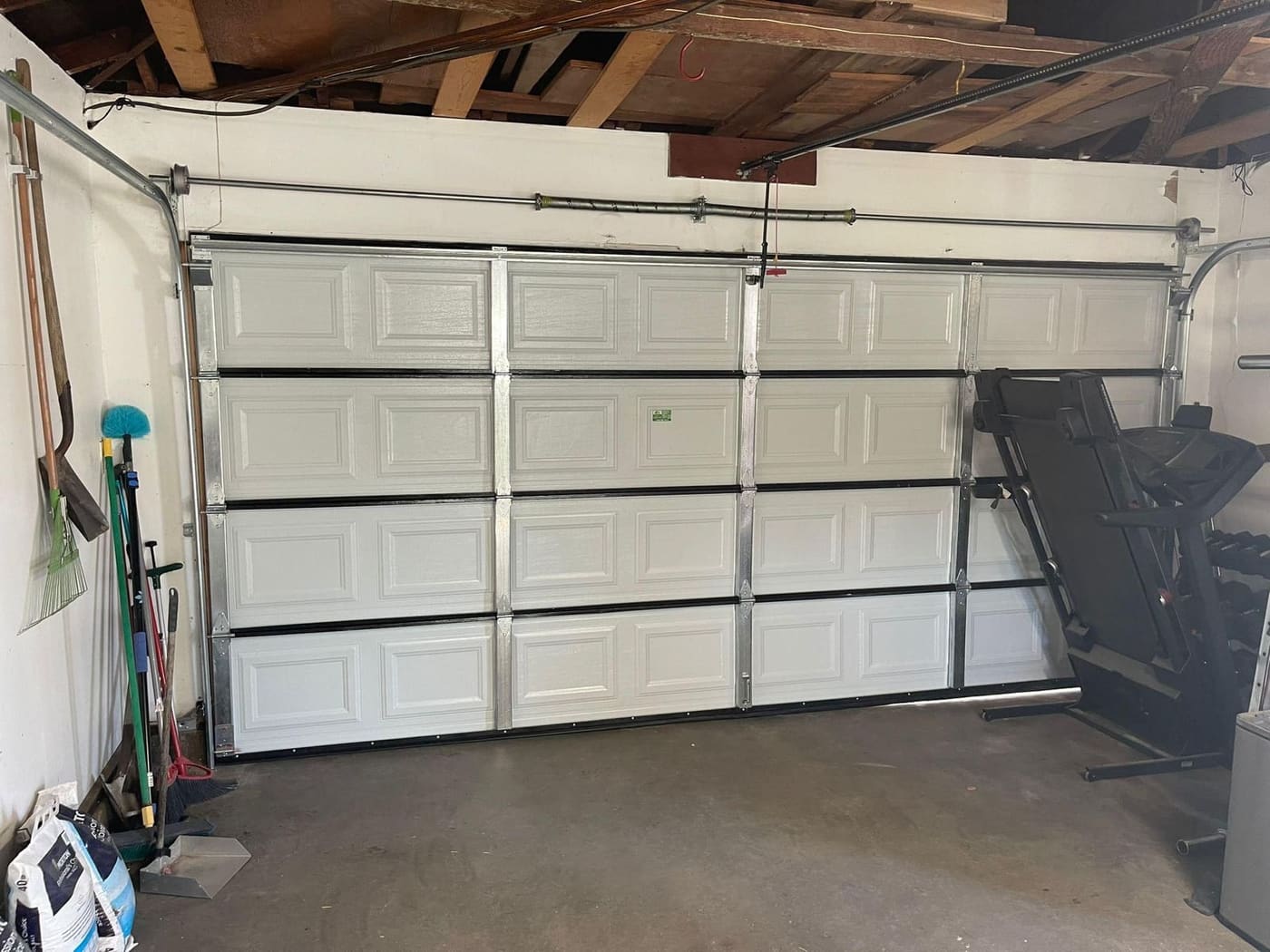
There are two main types. Torsion springs mount horizontally on a metal shaft above the door and wind up to store energy. Extension springs run along the horizontal tracks on either side of the door and stretch to provide lift. Both hold tremendous tension when the door is closed, which is exactly why a failure can be sudden and dramatic, and why the repair calls for proper training and tools.
Warning Signs You Have a Broken Garage Door Spring
Springs rarely fail quietly. Watch for these signs:
- A loud bang from the garage. A breaking torsion spring often makes a sound like a firecracker as the stored tension releases all at once.
- The door will not open, or opens only a few inches. The opener may strain, hum, or stop short because it can no longer lift the unbalanced weight.
- A visible gap in the spring. Look at the spring above the door; a two to three inch separation in the coil is a sure sign.
- The door feels extremely heavy. If you pull the manual release and the door drops or is impossible to lift by hand, the spring is not doing its job.
- The door looks crooked. A door that hangs unevenly or jerks to one side may have a broken extension spring or cable.
- Loose or dangling cables. When a spring fails, the cables can go slack and slip off the drums.
Stop using the door if you notice any of these. Forcing it can damage the opener, bend the tracks, or create a safety hazard for your family.
What Causes Garage Door Springs to Break
Springs do not last forever, and several factors common to Inland Empire homes shorten their life:
- Normal wear and tear. Every open and close is one cycle. Many standard springs are rated for roughly 10,000 cycles, which adds up fast in a busy household that uses the garage as a main entrance.
- Rust and corrosion. Moisture causes coils to deteriorate, weakening the metal and adding friction. Even light rust can cut a spring’s life short.
- Temperature swings. Scorching summers and cool nights make metal expand and contract. The big day-to-night swings from Riverside to Rancho Cucamonga put real stress on the steel.
- Lack of maintenance. Springs that are never cleaned or lubricated wear out faster. A little upkeep goes a long way.
- Improperly sized springs. If a previous installer used springs that did not match the door’s weight, they tend to fail early.
Why Spring Repair Is a Job for a Pro
It is tempting to treat a broken spring as a weekend project, but this repair carries real danger. Garage door springs store an enormous amount of energy, and a torsion spring that slips during an untrained repair can cause serious injury. The job needs the right winding bars, replacement springs matched to your exact door weight and size, and the experience to release and reset tension safely.
A trained technician will also catch related problems, like worn cables, frayed drums, failing rollers, or an opener that has been straining, that a quick fix would miss. For high-tension spring work and any electrical parts, the responsible choice is a trained, insured professional rather than risking injury or further damage to your door.
Repair or Replace? What to Expect From a Pro Visit
When a technician arrives, they look at the whole system, not just the broken spring. Here is what usually happens:
- Both springs are usually replaced together. On a two-spring system, if one has broken the other is probably near the end of its life. Replacing both prevents a second service call and keeps the door balanced.
- The hardware gets a full check. Cables, rollers, bearings, and the opener are inspected for the wear that may have led to the failure.
- The door is rebalanced and tested. Proper balance protects your opener and helps the new springs last longer.
Cost depends on several things, including whether you have a single or double door, the type and size of spring, and whether other worn parts need attention. For a closer look at pricing, see our guide to garage door spring replacement cost. A trustworthy company gives a clear, free quote before starting, so there are no surprises.
How to Help Your Springs Last Longer
You cannot make springs last forever, but steady maintenance stretches their life:
- Lubricate the moving parts. A few times a year, use a garage-door lubricant on the springs, rollers, and hinges.
- Test the balance. With the door closed and the opener unplugged, lift the door halfway by hand. A balanced door should stay roughly in place. If it drops or rises on its own, the springs need a specialist.
- Listen and look. Grinding, squealing, or jerky movement are early warnings worth addressing before a full failure.
- Schedule an annual tune-up. A yearly inspection catches small issues before they strand you in the driveway.
Get Fast, Safe Spring Repair in the Inland Empire
A broken spring does not have to wreck your day. Electra Gate Solutions provides insured garage door spring repair across Riverside, San Bernardino, Ontario, Rancho Cucamonga, Corona, Colton, Moreno Valley, and the surrounding Inland Empire, with 24/7 availability when it cannot wait. Call (951) 903-5514 for a free estimate, and ask about our discounts for new customers, seniors, and veterans. For a true emergency, see our 24/7 emergency repair service.