
A driveway gate is one of the biggest curb-appeal and security upgrades you can make to a property, and the first real decision is the style of motion: does the gate swing open on hinges, or slide sideways on a track? At Electra Gate Solutions we install both across the Inland Empire every week, and the right answer almost always comes down to your driveway width, slope, and the space you have to work with. Here is a clear, honest comparison so you can choose with confidence.
How a Swing Gate Works
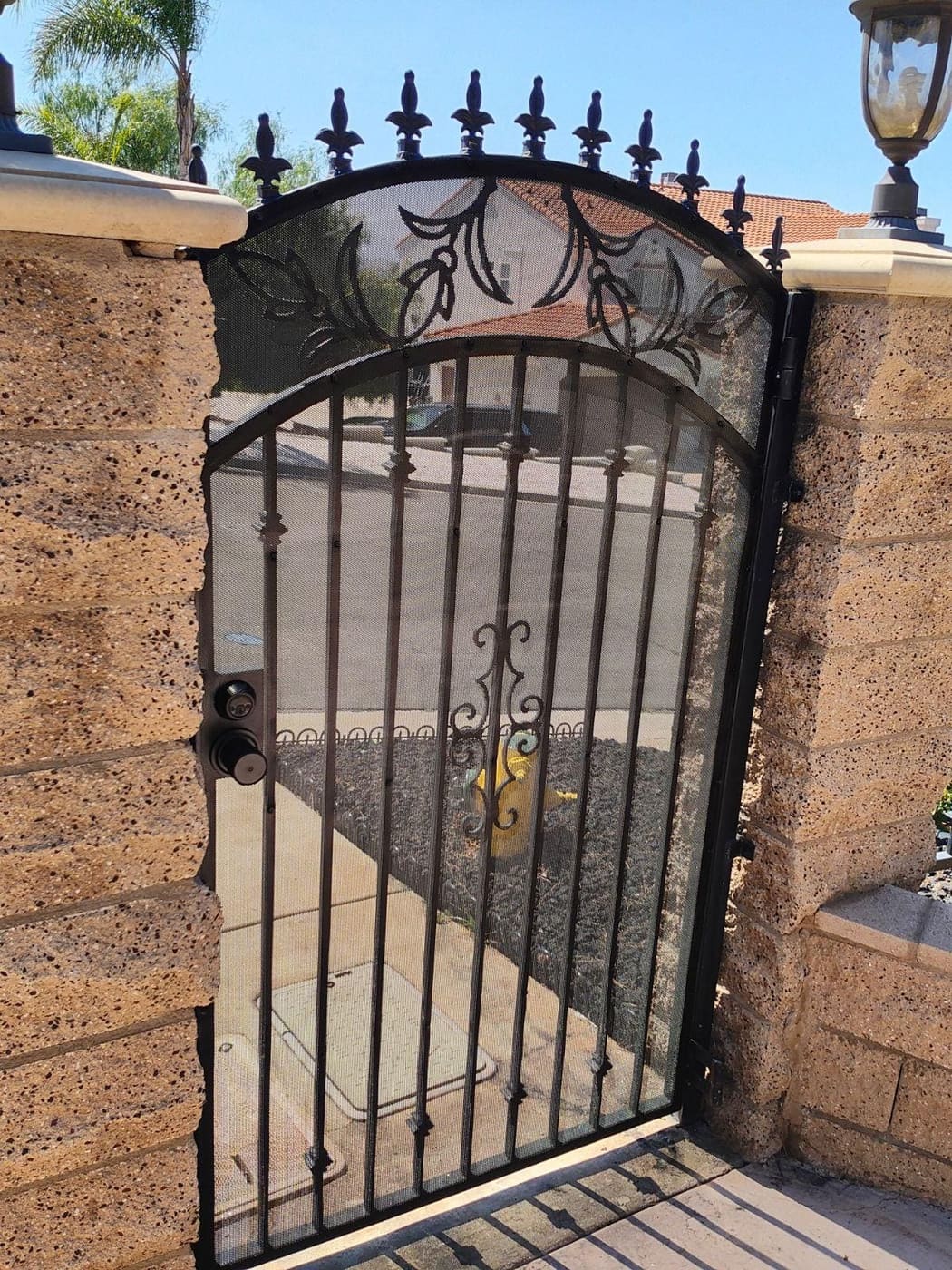
A swing gate is hinged on one side (single-leaf) or split into two halves that meet in the middle (double-leaf), and it arcs open like a door. A swing operator - typically an arm or piston mounted at each post - pushes the leaf inward or outward. Because the gate rotates around its hinges, it needs a clear, fairly level arc of ground to travel through. Swing gates are the classic look for wrought-iron entrances and estate driveways, and they pair naturally with wrought iron gate repair and ornamental designs.
How a Slide Gate Works
A slide gate moves sideways, parallel to the fence line, rather than swinging into the driveway. There are two common designs: a rolling gate that runs on a steel track in the ground with wheels, and a cantilever gate that is suspended on rollers and floats above the ground with no track to collect debris. A slide operator pulls the gate open along its path. Because it never swings into the driveway, a slide gate is ideal where space is tight or the ground slopes.
Pros and Cons at a Glance
Swing gates tend to be simpler, often less expensive to install, and quieter, with fewer ground-level parts to maintain. Their main limitation is space: a single 12-foot leaf needs roughly 12 feet of clear arc to open, so a short driveway or a car parked too close will block it.
Slide gates shine on narrow lots, sloped driveways, and properties where vehicles stack up near the gate. The trade-offs are a track or roller system that needs periodic cleaning, and a need for clear “run-back” room along the fence for the gate to retract into. For a deeper look at the styles, see our swing vs slide gates and how to choose a gate opener guides.
Best Use Cases: Width, Slope, and Space
Use these rules of thumb as a starting point:
- Level driveway with open space inside the gate: a swing gate is usually the cleaner, more affordable pick.
- Sloped or uphill driveway: choose a slide gate. A swing leaf that has to ride up a grade will scrape or bind, while a slide gate simply travels sideways.
- Narrow lot or short driveway: a slide gate avoids the deep arc a swing gate demands.
- Wide entrance (16 feet or more): a double-leaf swing gate or a single slide gate both work - the right call depends on the post locations and run-back room.
- Tight street frontage where you cannot block the sidewalk: a slide gate keeps motion off the public way.
Homeowners across Riverside, Corona, and the rest of the region call us with exactly these questions, and a quick site visit settles it fast.
Security Considerations
Both gate types are highly secure when built and automated correctly. Slide gates can be harder to force open because they are braced against the track and posts along their full travel. Swing gates rely on solid hinges and a strong latch or operator hold. What matters most for security is the access system you pair with the gate - keypads, intercoms, and remotes. Whatever style you choose, we can add gate access control and a properly sized opener through our gate opener installation service.
Maintenance and Longevity
Swing gates have the simplest mechanics: keep the hinges lubricated, check that the posts have not shifted, and confirm the operator arms are aligned. Slide gates need a little more attention at ground level - clear leaves and debris from the track, lubricate the rollers, and keep the bottom guide clean so the gate runs smoothly. With either style, an annual once-over keeps small issues from becoming breakdowns. When something does go wrong - a stuck gate, a noisy operator, or a gate that will not close - our electric gate repair team is available 24/7.
Decision Checklist
Run through these questions before you commit:
- Is your driveway level or sloped? Level favors a swing gate; sloped favors a slide gate.
- How much space is inside the gate? Less than the gate’s width in clear arc means a slide gate.
- Is there run-back room along the fence? A slide gate needs roughly its own width to retract.
- Do vehicles often wait close to the gate? If so, a slide gate avoids them blocking the swing.
- What look do you want? Ornamental wrought-iron entrances often read best as swing gates.
- What is your budget? Swing installs are frequently more economical, but the right fit matters more than upfront cost.
If you can answer most of these, the gate type usually becomes obvious. If not, that is what we are here for.
Get Expert Help Choosing
Still unsure? A short conversation or a quick visit to your property in Riverside or anywhere across the Inland Empire will give you a clear recommendation - no pressure, no guesswork. Whichever direction you go, we handle the full job through our driveway gate installation service, and we are fully insured with a 5.0 rating from 57 reviews.
Call (951) 903-5514, request a free quote, or contact us and we will help you pick the gate that fits your property, your budget, and the way you actually use your driveway.